10. The Berliner Unwille #metoo
A writer friend of mine C was in town for a writing workshop. We’ve been working on a film script together since around March. The plan was that we squeezed some time to work on the script together during her short stay in Berlin. In one of those creative days we spent together, she took me to the Shakespeare and Sons bookstore on Warschauer Strasse so that we could unleash our inner bookworms. Good friends enable each other to shop, so we both gave in to the other person’s proposal of a once-in-a-lifetime read—she bought Joann Didion’s The Year of Magical Thinking, I bought Rory Maclean’s Berlin: Imagine A City.
Even before moving to Berlin, I had known Berlin as a city that has its own ways of producing art, especially art of resistance. Berlin is known to be a cradle for both art and resistance, and for the two to meet, kiss, and embrace. Although it has never staged a successful revolution, the city has celebrated the fall of a wall that divided a country for 29 years, a different but perhaps not so different occasion where people were unified.
At our reunion in Berlin many years ago, my PhD mentor, French philosopher Etienne Balibar said to me as we walked down Friedrichstraße, “independence is not always a good thing, sometimes it takes more to unify.” He was commenting on the EU. But as we were walking down the street where US and Soviet tanks once faced off at Checkpoint Charlie and literally cut the street and the city in two, we naturally both had Berlin in mind. A city that failed to stage a revolution, but has never failed to rise like a phoenix from the ashes of wars and divisions.
Opening Rory Maclean’s book, his prologue reads:
“This book portrays the city through those men and women, alongside some of the countless others whom one has never heard of, whose lives can only be divined: Germans and foreigners, native daughters and adopted sons, politicians and painters, a broken-hearted king and a reborn pop star, a diabolical genius and at least one angel. Each of them is different, each an individual. But one characteristic unites them all, as well as their modern counterparts. In this laboratory of creativity and evil, in this Heimat of fantasy and Death, Berlin dared them to imagine.”
The book is a collection of portraits of historical figures (some hardly known by the public) in Berlin. It became my best company on the grass on a sunny day, on the U Bahn, on the shores of Lake Tegel and Krumme Lanke. I kept it close to me in my handbag as I found my way in the city, ruminating on what exactly it dares me to imagine. Actually for a long time, I was not sure what attracted me to Berlin. After seven years of graduate school in an Ivy League school where every aspect of my life was taken care of, and all in all 10 years on the East Coast, Berlin is in comparison poor, dirty, and above all, totally foreign to me. Unlike victims of wars and famines, I voluntarily uprooted myself, replanted myself into unaccustomed earth.
Until very recently, as I was reading news on the #metoo movement on WeChat, which inspired this blog post, I had a revelation about my urge to move to Berlin. The past few months, my WeChat pengyouquan (similar to Facebook news feed) has given way to waves of the #metoo movement. Given China’s enormous population, no news stayed relevant for very long. Much like waves, news in China usually ebbed and flowed, and eventually disappeared from the public eye in about two weeks’ time. But somehow, the #metoo waves managed to find their way back onto the shore, again and again. Suicides of young women kept appearing on my social media walls.
Looking back to my own #metoo incident, I was very angry for almost two years. Anger. Not any other emotion, but anger. I didn’t understand where my anger came from. Only after living in Berlin for some time, I was able to see things objectively, come to terms with it, and process it in a way that I recognized my own rising from the ashes, like a phoenix. Not every woman had the opportunity to do that, to regroup and reorient. Not to every woman, a new door would open. Many ended up appearing on people’s WeChat pengyouquan, Facebook news feeds, podcasts, and online news, as tragic stories to be shared, and disappeared.
I came to the realization that my anger was not towards my predator, but myself. I’ve been angry all this time, because I have let it happen to me without attempts of resistance, but rather, have succumbed to worldly worries. Without me being aware of it, the Berliner Unwille, a historical event that happened almost 600 years ago where the angry Berliners revolted against Frederick II’s building of a new castle on the Cölln Island of the Spree, which instilled a sense of resilience into its residents, drew me to the city. My move to Berlin was my rebellion in essence.
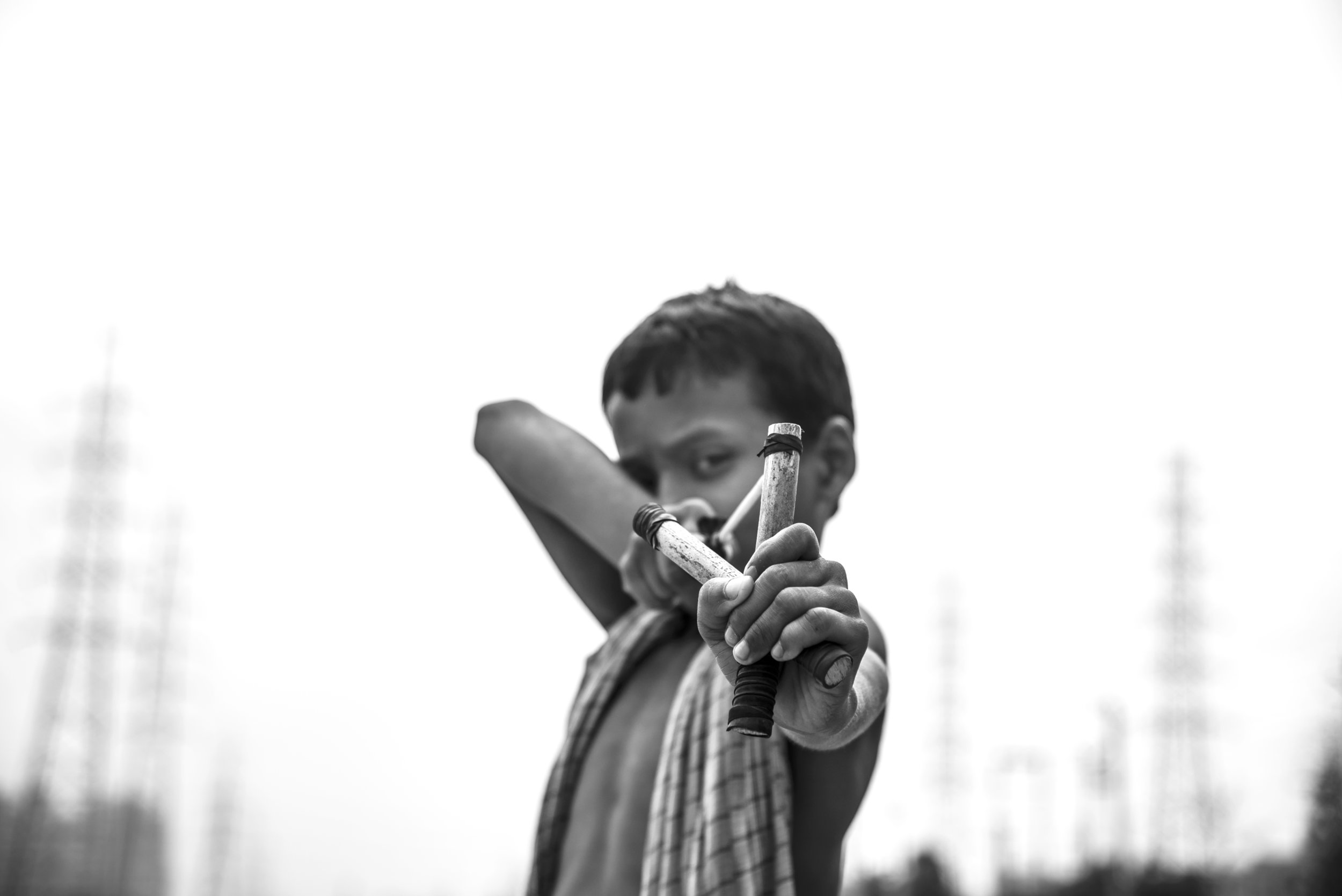
My experience makes me start to ponder, how should we educate our children? Should we teach them to abide by social rules and expectations, and play a safe game? Or should we fan their flames, encourage them to be unapologetically themselves, sometimes even despite their own well-being?
R, my writing partner, introduced me to a recently launched Netflix show, Nanette, in which Hannah Gadsby, the lesbian Australian comedian told various stories which eventually led to her decision to give up comedy and tell un-comedicized true stories, mostly stories of abuses she encountered as a lesbian. What touched me most was when Gadsby said, her mom apologized to her for making her “change” when she was a child, because her mom knew the world wouldn’t. But eventually her mom realized that she would have to learn to fight for who she really is, otherwise she would never be happy.
I told my German photographer friend M about me considering the topic of “the Berliner Unwille” for my blog. Given his down-to-earth attitude towards life, art, and pretty much everything, he immediately responded, “Yes, the Berliner Unwille, that’s why the waiters and waitresses in Berlin always have an attitude.” At first, I was slightly annoyed by his connection of such a grand romantic idea to the pettiness of bad service. But giving more thought to it, I realized he had a point there. The Unwille manifests itself as people refuse to serve that which they don’t want to serve, be it a customer, a king, a doctrine, or an ideology. The Unwille is when one fans one’s own flames without thinking about whether the flames would burn oneself. Perhaps the #metoo movement should be called the #ichauch movement instead, “ich auch” as in “I too” carry with me Berliner flames.
Biography of the photographer, Mona Singh: “I grew up in Delhi, India. I come from a pretty conventional family. I am a gypsy photographer who loves to travel with a camera in my backpack. Be it exploring the myriad streets of India, the bohemian lives of Berliners, the Gaudi architecture of Barcelona, or the wildlife of Sariska, i use my LENS to pen down my travel stories.”