6. “Cinema Paradiso”
Because of my father’s job, we moved from Luohu District to Futian District when I was in second grade. I was assigned to a mediocre elementary school in our neighborhood with classmates from all sectors of society and different social classes, which, inadvertently, shielded me from many of the new ideas surrounding wealth and class that were burgeoning in the 90s in China. I witnessed skyscrapers being erected almost overnight, but the six-story building of my elementary school and the little residential neighborhood it was located in remained serene in my memory as a place of curious objects, mythical corners, and enchanting adventures. It was as if we gathered to play, and then, the secret language we used among us would turn into spells and summon fairies to our presence.
I must have been in the 3rd or 4th grade, when I started this game with some of my classmates: we drew small figures on our exercise notebooks, cut them out, and then we would go behind the lecture desk in the classroom, pull the drawer out slightly, and improvise a play that involved those paper figures. Once the impromptu puppet theater was set up properly, one of us would run to the other side of the lecture desk and look through a peephole in the wood desk. Daylight in combination with the florescent light in the classroom lit up the “set” which was the little space that opened up between the edge of the desktop and that of the tray. In that little in-between space, temperamental knights had picked a fight with each other, kings were murdered, earthquakes had took place, and pickpockets had stolen a fortune. It was as if we had already understood then, at the age of ten, the inevitability of upheavals in life, and the unpredictability of one’s fortune.
Sometimes we would use random objects we found in the classroom, a chalk stick, a ruler, a wood case pencil, or a ladybug we found near the window, as props for our impromptu plays. The joy of having found a new prop was almost as great as it being one’s turn to peep through the magical viewer. The division of our creative labor was simple: the audience and the puppet-operators. Our theater had about five staff members in total; whoever did not go home for lunch break or stayed longer after school would join in producing the play of the day. There was no director needed in our plays, as the sequence of events was dictated by the natural flow of imagination of the operators.
Those magical hours and many others in which no Chinese poems needed to be recited, no math equations to be solved, took shape in me as secret flames, which were locked away in the drawer of that wood lecture desk and kept burning throughout these years. They were not so much flames for theater per se or even for storytelling—it was never something so concrete, but they instilled into me an understanding of the pure joy of creation, the alchemy of turning imagination into play.
Of course, narratives like this are what we create for ourselves to map out a genesis of our passion. We always like to look back to see what has brought us to the present, to something we seem not to be able to stop pursuing. But I believe that passion that dies and gets resurrected, dies again, and gets resurrected again, must hold some truths in them.
The other day I met up with my writer friend M at a Turkish café near U Bahn Station Gneisenauerstraße in Kreuzberg. M was in the process of writing a children’s play for a theater in Turkey. We started to chat about our childhood and how we thought it had contributed to the beliefs or angst we developed as a writer. I told her about my experience of growing up in an education system where censorship was all around, so was an overwhelming sense of competition. Having freshly come out of poverty through the 80s, parents and teachers were insecure about never having enough materially. That sense of insecurity then got transmitted into our daily life at school in the forms of competition, comparison of wealth, and other copies of the many evils of the “adult’s world.”
But somehow I felt shielded from the angst of “the prosperous 90s,” partly due to my parents’ quiet rebellion against the rigid education system—“Go play!” my mom would always tell me. Her constant affirmation of my right to play had set me free from the worldly worries that had infiltrated our world from the adult’s one. But on a deeper level, I wanted to believe that all children are secretly protected by fairies. Us back then, children today, and in the future. I wanted to believe that the little paradises of play children create for themselves could be so much more powerful than any agony, angst, Weltschmerz, or ideological crisis that happened to be prevailing at the time.
Hearing my stories, M told me that she had a different relationship with the education system when she was a kid. Growing up in a family of two painters in a suburb near Paris, she found herself contrarily succeeding in an education system that alienated free-spirited artists like her parents. Her path of becoming an artist has since become a journey of untying herself from the system. Although she grew up with two artists, it was only recently she came to understand, one of the most valuable things she has as an artist is how they taught her to see the world. In the way they live, everything is still magical.
There are many ways in which an education could go wrong, but there are also many ways in which an education could happen without an educator. The books we read. The films we watched. The silly games we played with our classmates to kill time. The people we met who gave us magical lenses to see the world, like Alfredo the projectionist in “Cinema Paradiso,” the 1988 Italian classic. With his acceptance of young Salvatore into the projection booth, old Alfredo gave him the permission to take possession of all the magic in that room. With the little pieces of film he stole from Alfredo, Salvatore must have felt that he had claimed ownership of the entire cinema, just like I did of the six-story building with my paper puppets.
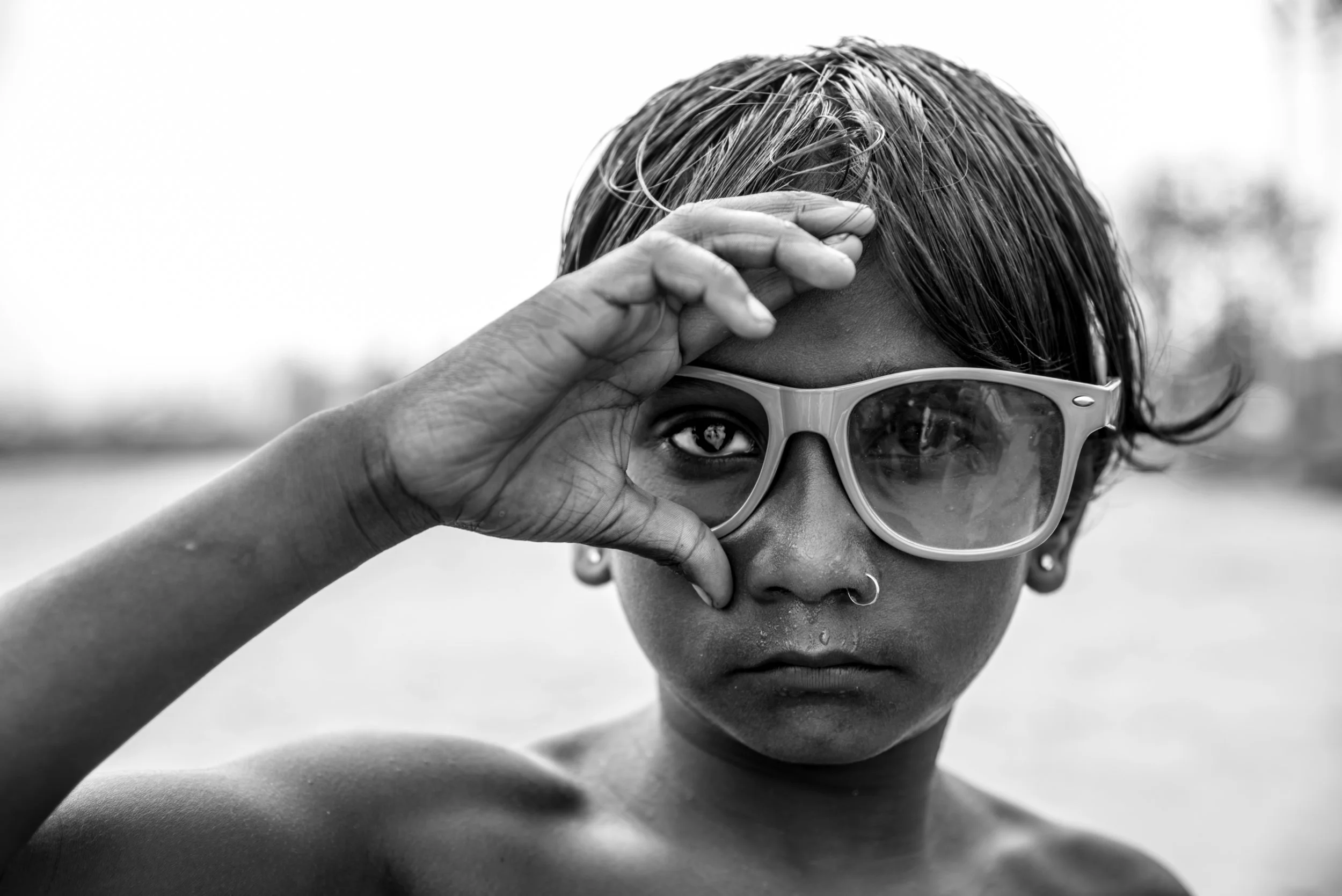
Biography of the photographer, Mona Singh: “I grew up in Delhi, India. I come from a pretty conventional family. I am a gypsy photographer who loves to travel with a camera in my backpack. Be it exploring the myriad streets of India, the bohemian lives of Berliners, the Gaudi architecture of Barcelona, or the wildlife of Sariska, i use my LENS to pen down my travel stories.”