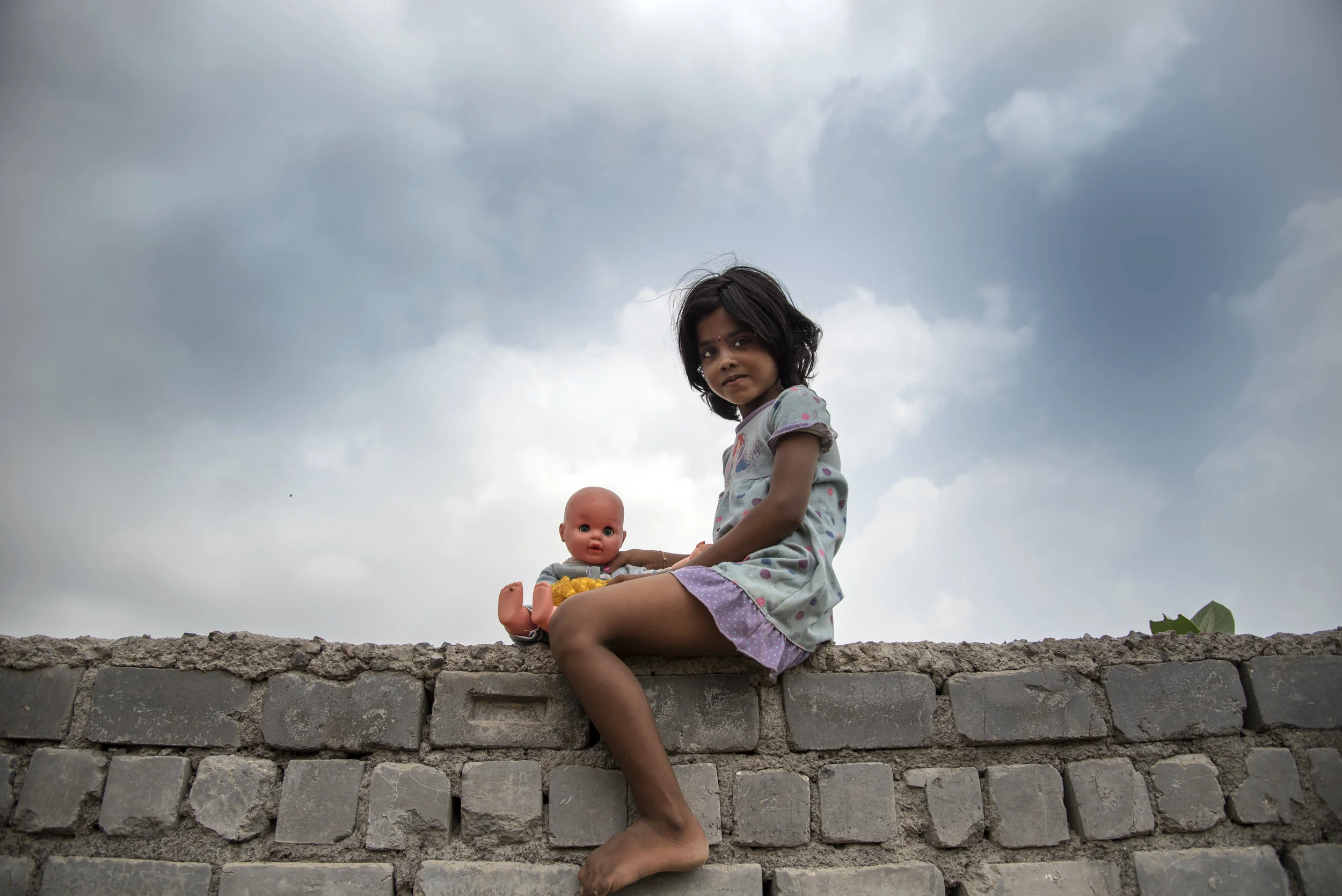
7. Unaccustomed Earth
“Human nature will not flourish, any more than a potato, if it be planted and replanted, for too long a series of generations, in the same worn-out soil. My children have had other birthplaces, and, so far as their fortunes may be within my control, shall strike their roots into unaccustomed earth.”
A quote from Nathaniel Hawthorne’s “The Custom-House” opens Indian American writer Jhumpa Lahiri’s short story collection, Unaccustomed Earth. The story under the same title “Unaccustomed Earth” is about a father’s readjustment to his new life after the death of his wife, as it was seen from the perspective of the daughter. What adds a deeper layer of meaning to the story is the father being a first generation Indian immigrant. The seemingly typical story of grief is set against the backdrop of a less commonly represented family in American literature: a bereaved immigrant father who began traveling alone in Europe, a second generation Indian-American daughter who started a family on her own, and a forever missed and absent immigrant mother.
Given American literature’s predominantly “white canon,” Lahiri’s writing naturally appeared more appealing to me—a foreign student at an American university with an insatiable appetite for books that would help me understand a new culture. The relations between the generations in Indian immigrants families is a common theme that runs through most of Lahiri’s short stories and novels, for a reason that is most obvious: we all write from our own experiences. We are culled by stories in our lives, be it our own or others, and made by them into writers.
For Lahiri, the experiences that defined her as a writer is her growing up in an Indian immigrant family. For me, it was my move to Shenzhen in the early 90s and growing up, almost in a hurry, along with the city; then leaving for the United States after high school; and most recently, moving to Berlin from New York City. Three times, I’ve struck my roots into unaccustomed earth.
About a year ago, I began my third strike into unaccustomed earth as I packed up all my belongings—one box of clothes, four boxes of books, collected throughout my ten studious years in America, and shipped them along with myself to Berlin. It was the beginning of an ardent attempt to grow new roots into the Kartoffel-land (“potato-land”), Deutschland. I have to say, third time around, I felt no more equipped and adequate as an immigrant than the first time. Or perhaps, the point of being an immigrant is that one will never feel completely adequate in the new soil. I found myself caught in the same struggles of coping with a new bureaucracy, finding new friends to share a cozy evening of wine and homemade food with, and the desperate search for a long-term roof over my head. So now a year later, I become “rice” growing in potato soil—not too badly adapted, only occasionally complaining, as my fellow Kartoffeln (“potatoes”) often do, that the soil is slightly too dry and stony for me.
One of the first German words I learnt is actually Kartoffel, along with ja (yes), nein (no), danke schön (thank you), genau (exactly), and Aufheben (“to sublate,” a philosophical term used by Hegel and Marx to explain dialectics). At the end, they all turned out be quite useful, except Aufheben, which is however sprinkled in the books I loyally shipped to Berlin. Only later in my adapting process, I learnt the German word jein, so ja (yes) but also nein (no); I learnt that sometimes it is good to keep yes and no un-split, for only in the yes and no continuum German philosophizing finds the space to flow; I learnt to sit around during all the in-between hours, between Morgen, Mittag, and Mitternacht, waiting for stories to be told, coffee to be made, unhappy romantic encounters to be poured into wine glasses, and then more coffee to be made, more wine to be poured into glasses.
I’ve asked many of my German friends about the history of Germans’ insatiable love affair with potatoes, as I found the loyal hearts of my German friends mostly unfathomable, especially when I was offered cold boiled potatoes at dinner tables. To summarize the “oral history,” it seems that Germans’ passion for potatoes comes from the fact that it is a common ingredient of dinner dishes made by mothers and also food that helped people get through famines since the 18th century. In 1756, the Kartoffelkönig (“Potato King”) Frederick the Great issued an official Kartoffelbefehl (“potato order”), demanding farmers to grow potatoes, as it could be grown in poor soils and easily harvested. We are often led to love what our parents love, and then that love becomes a tradition, a history.
One of the underlying questions of immigration is, however, whether children should be put through precarious circumstances, when they don’t have a say about their own fortunes. Should they be made to strike their roots into unaccustomed earth?
When I moved to Shenzhen to reunite with my migrant parents in the early 90s, we lived in a temporary hut with a tin roof. Every time when there was pouring rain, I would have to make myself earplugs out of cotton balls. The children TV shows I watched before the storm would instantly turn as mute as the battle of rain and thunder on the other side of the tin roof. It came as a surprise to me how quiet rain had become, since we moved to an apartment with concrete walls.
The children in Huaqiangbei (in Shenzhen), the central market of the “Silicon Valley of China,” seem to share my biased fondness to my parents’ workplace. For my new documentary, we’ve been following these children running around in the market, contributing to business deals of thousands and millions of units of electronic components, and assisting parents to wrap packages of sold goods. In their candid eyes, they saw a wonderland of mystical creatures and untaken adventures.
I read Lahiri’s first novel, The Namesake, in my freshman year. It was a book about the growing up of two immigrant children. Rereading it last summer, I understood something that I didn’t understand before: you are always “wealthier” when you have come from another culture, “wealthier” as in having collected more adventures, hardships, nuances, and above all, stories. I still haven’t wrapped my mind around my parents’ decision to bring me along in their first turbulent years in Shenzhen, as they partook in the history of building a new city, and to some extent, a new China. I was too young to have a say about my own fortunes.
Biography of the photographer, Mona Singh: “I grew up in Delhi, India. I come from a pretty conventional family. I am a gypsy photographer who loves to travel with a camera in my backpack. Be it exploring the myriad streets of India, the bohemian lives of Berliners, the Gaudi architecture of Barcelona, or the wildlife of Sariska, i use my LENS to pen down my travel stories.”